

Become the next Mary Anning!
A Guide for aspiring Fossil Hunters & Palaeontologists
Mary Anning’s story shows us that anyone, from anywhere and with any background, can change the world and excel in sciences. That also includes you! But how do you start the journey? How do you become a fossil hunter or a palaeontologist (someone who studies prehistoric life)?
Thousands of tourists visit Lyme Regis and the surrounding coastline to fossil hunt – a tradition stretching back hundreds of years. Fossil hunting takes practice and a keen eye, but once you get into the swing of it (and get lucky) you’ll be returning with buckets full of Jurassic Treasure!


Where to Look
Fossils form in rock formations, such as mudstones, sandstones and limestones. Every rock will have different properties and fossil types preserved within it. The mudstones usually preserve the nicest fossils – they are easy to prepare (you can wash the mud away) and allow the fossils to retain their original dimensions. You can also find rocks in hard, white limestone ledges. These are usually very hard (it’s not recommended that you hammer them) and heavy (you might see an enormous ammonite impression, but won’t be able to take it home).
On the beach at Lyme Regis, the best place to find the best fossils is in-between the big boulders in the gravel. Most fossils will be small (no bigger than 10 centimetres).
How to Look
Nature champions symmetry and regular shapes. Fossils in Lyme Regis tend to be preserved either calcite (a light-brownish translucent mineral) or pyrite (fool’s gold, named for its gold and rustic appearance). Look at clusters of pyrite rock on the beach, rock that is either grey-greenish and globular/bobbly in appearance or covered in golden glitter-like specs. You’ll be on track to find a “pyritized” fossil – usually a lovely, coiled snail-like “golden” ammonite. Also, look out for ammonites preserved in “beef”, these are round grey flakes of rock that look a little bit like Oreo cookies!
What to look for
You can find elements of “Sea Lilies” on our beaches or crinoid ossicles, these usually form long stacks (or stems) of things that look like tiny star-fishes. Sea Lilies are from the same family as starfish and sea urchins and are usually preserved as white stacks of tiny stars.
Bone can come in irregular shapes. In the Lyme Regis area it is usually pitch black, with white specks (calcite infilling pore spaces and blood vessels). The most common fossils are vertebrates (backbone) which is round or hexagonal with a deep round indentation in the middle.
Look out for greyish rocks that look like shells and bivalves; and black shiny specs that might be the fish scales. Carbonised elements of driftwood can also be found.
You might also find bullet-shaped brownish bolts, with a glass-like texture. These are the guards of belemnites – prehistoric squids.
Ammonites are the most common fossil, and the most rewarding to find for their lovely, coiled shells! You can find them in grey rocks (beef), as imprints in mudstones, or wonderfully preserved infilled in with golden pyrite or calcite crystals.
Lyme Regis Museum staff are always happy to help you with identification!
What do I need?
Patience, somewhere to put your fossils and keen eyes! Hammers are non-essential; the best fossils can be found lying free in the beach gravel. You can use a chisel and hammer if you want to split open nodules (skittle-shaped concretions) that can hold a fossil. Remember, climbing on and the hammering of ledges and cliffs goes against the code of conduct.
Stay Safe!
Remember! Although fossil hunting is a great fun and rewarding, beaches can pose dangers, from incoming tides to cliff falls and slippery surfaces. Hazards such as glass and rusty metal can often be exposed on the popular fossiling sites and are an injury risk. Always be vigilant, wear appropriate clothing for the weather conditions, keep hydrated and stay safe.
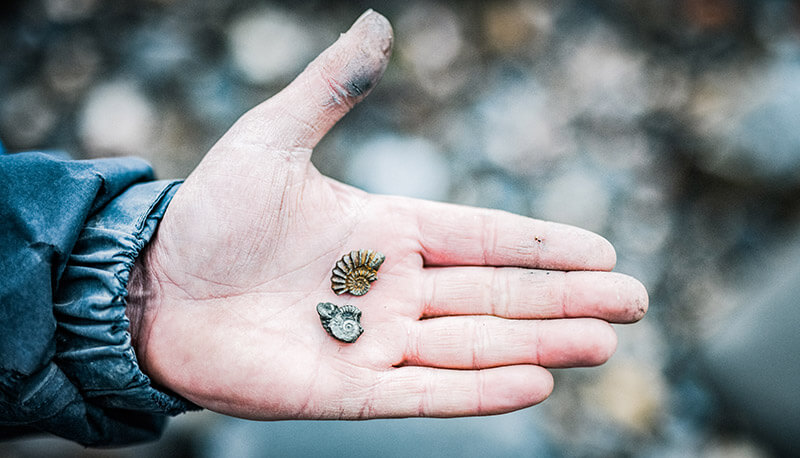
Could you be the next famous palaeontologist? Only time will tell!
By following these steps, you’ll be well on your way to becoming a skilled fossil hunter, just like Mary Anning. Remember to be patient, persistent, and never stop learning! With hard work and dedication, you might just make the next groundbreaking discovery in the world of palaeontology!
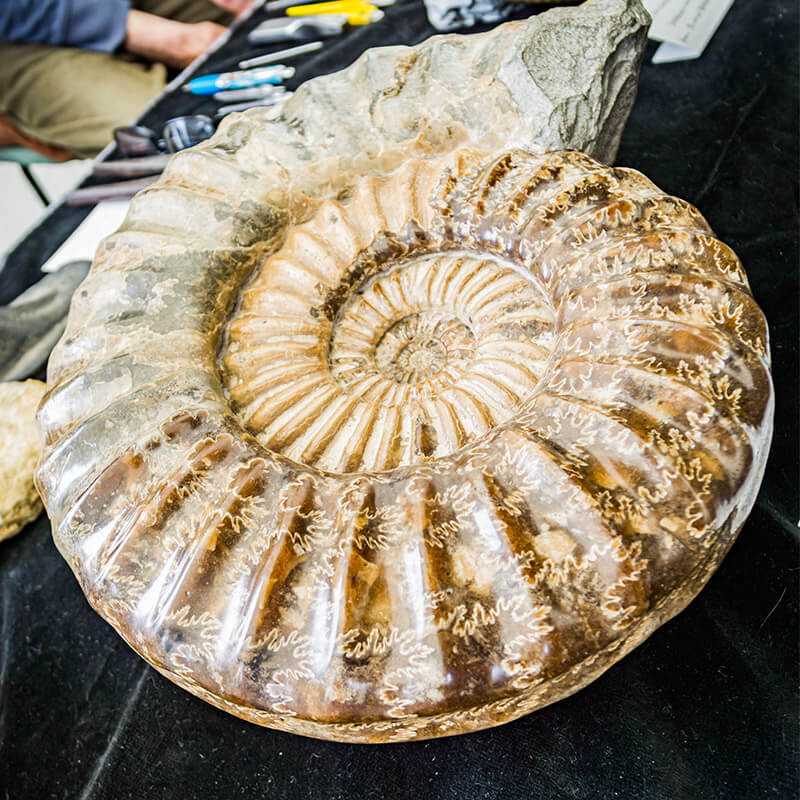
Have you seen the Competition ?
The 6 winners will have their fossil on display at the museum for 12 months. The winners and their family will have the opportunity to visit the museum where they will receive a free family pass for entrance to the museum (2 Adults, 2 Children – Annual Pass).
The opportunity to meet Dr. Steve Etches, MBE to talk about their fossil. There will be photo opportunities and they will receive a special certificate.
Winners will be displayed on all social and digital media platforms. All submissions will receive an e-certificate of appreciation for their efforts.